Vinyl liners can completely transform your aging pool with modern designs ranging from abstract patterns to natural stone visuals. You’ll enjoy lower costs compared to concrete resurfacing, with installations taking just 1-3 weeks. When properly maintained with balanced water chemistry and protective measures, these liners last 10-20 years. Choose from luxury finishes like Blue Astoria or add safety features with textured steps. Discover how this cost-effective option delivers premium aesthetics without breaking the bank.
Understanding Vinyl Liner Renovation Options
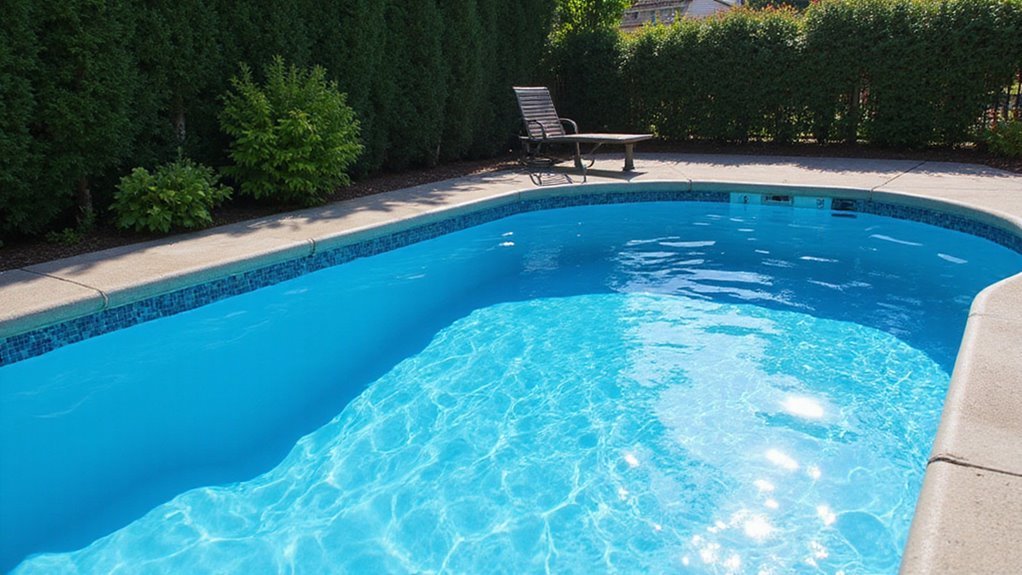
When considering a vinyl liner renovation for your pool, you’ll find numerous options to enhance both appearance and functionality. Modern liners feature UV-resistant designs with abstract, tile-like, or natural stone visuals that can transform your pool’s aesthetic.
Color choices range from dark blues that blend with your landscape to vibrant hues that create dramatic contrast. You can preview these options using digital visualizer tools before making decisions. Whether your pool is freeform, rectangular, or modular, custom-fit liners guarantee perfect coverage.
Beyond the liner itself, consider upgrading surrounding elements like deck surfaces and coping. Non-slip textured decks improve safety, while thermoplastic or stainless steel copings deliver contemporary finishing touches. A complete renovation with new liner, steps, deck, and coping can be completed in surprisingly affordable timeframes, typically requiring just a few days. Most vinyl swimming pool liners last 10 to 15 years with proper maintenance. Vinyl liners are low maintenance compared to other pool surface options, making them an excellent choice for busy homeowners. It’s also an ideal time to repair any structural issues that could damage your new liner. Regular maintenance like balancing water chemistry will help preserve your vinyl liner and prevent staining or wrinkling over time.
Signs Your Pool Needs Liner Replacement
Recognizing the telltale signs of vinyl liner deterioration can save you thousands in preventable structural damage to your swimming pool. Watch for visible cracks, tears, or a liner that’s detaching from its bead track—these are clear indicators of imminent failure.
You’ll notice aesthetic changes first: fading colors, stubborn stains, and rough surfaces signal underlying degradation. Physical distortions like wrinkles, bubbles, and sagging sections further compromise structural integrity. Even with proper maintenance, most vinyl liners need replacement after 6-12 years depending on usage and weather conditions.
The most costly warning comes through operation issues. If you’re constantly adding water beyond normal evaporation (easily confirmed with a bucket test), your liner is likely leaking. These water losses not only inflate utility bills but can erode your pool’s foundation. Don’t ignore these signs—they rarely improve with time.
Cost Benefits of Vinyl Liner Installation
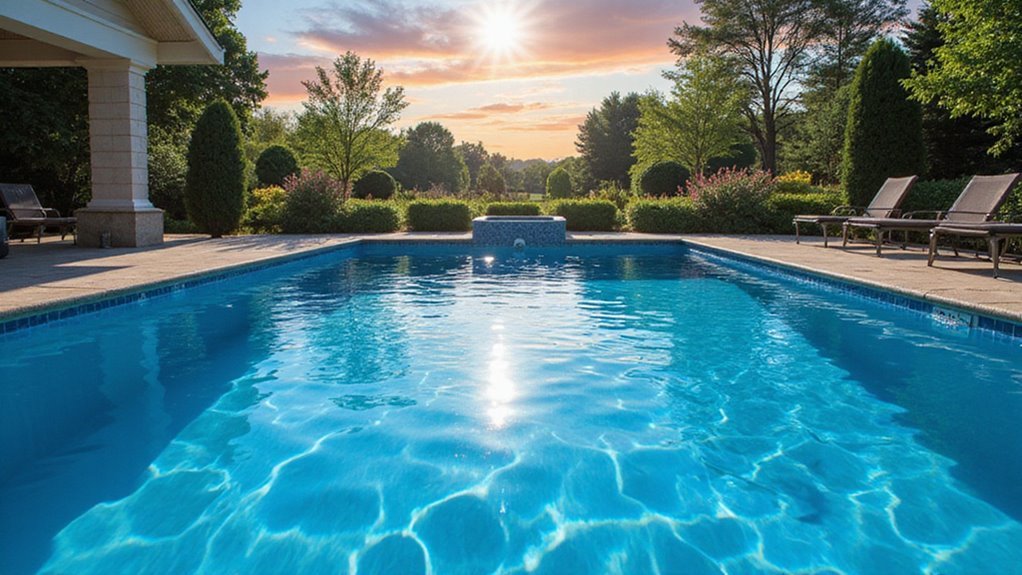
The financial advantages of vinyl pool liners extend far beyond their initial appeal. You’ll enjoy notably lower upfront costs compared to concrete or fiberglass options, with installations ranging from $25,000 to $75,000 depending on your pool’s specifications. The non-porous surface requires fewer chemicals and less maintenance, saving you approximately $1,000 annually.
Invest smart with vinyl liners—lower initial costs, reduced chemical needs, and thousands saved annually on maintenance.
- Installation takes just 1-3 weeks versus months for concrete pools
- Liners last 10-20 years with replacement costs of $7,500-$8,500
- Small tears can be patched rather than requiring complete replacement
- No expensive resurfacing costs like concrete pools that can exceed $15,000
When it’s time for replacement, you’ll appreciate the opportunity to update your pool’s appearance with any of the 1,000+ available patterns, keeping your backyard oasis fresh and modern.
Extending Your Pool Liner’s Lifespan
While vinyl liners offer significant cost savings, maximizing their lifespan represents your best return on investment. Maintain proper water chemistry with pH between 7.2-7.6 and alkalinity at 80-150 ppm through daily testing. Control calcium hardness (200-400 ppm) to prevent scaling and etching.
Protect your liner by applying specific protectants to areas above the waterline and cleaning edges monthly with approved cleansers. Never use abrasive tools. For environmental protection, install thick winter covers, maintain stable water levels, and consider shade structures in high-UV environments.
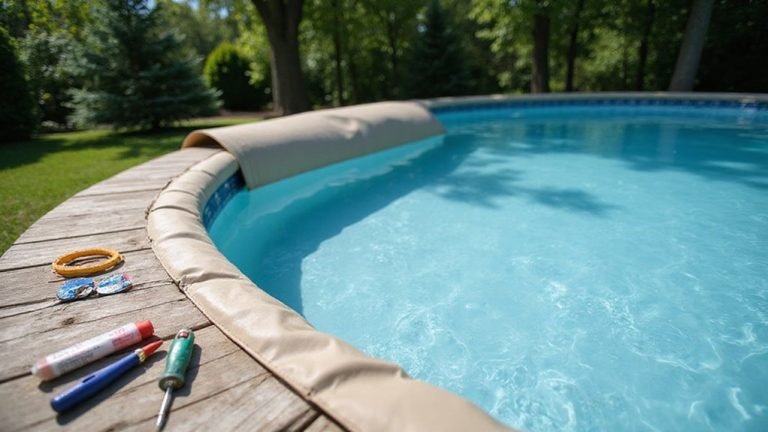
Apply Liner Life Extender paste to waterline areas and seal small tears immediately. You’ll also want to avoid extreme recreational activities and secure loose items during storms to prevent punctures. Replace worn coping components to maintain proper tension.
Enhancing Your Pool With Modern Vinyl Design Choices
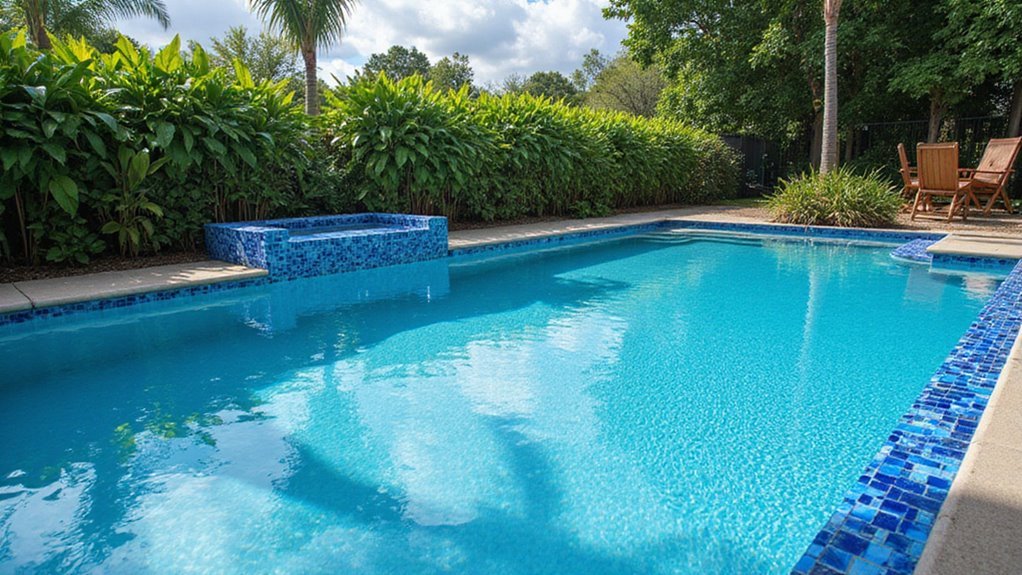
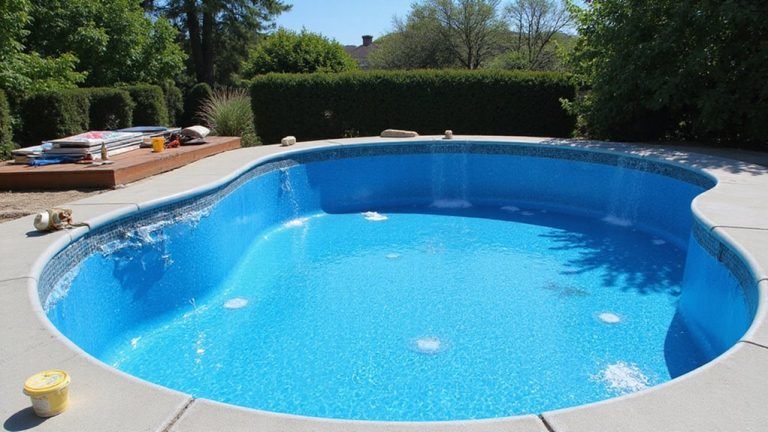
Vinyl pool liners have evolved dramatically in recent years, offering homeowners unprecedented design flexibility without premium costs. Today’s options range from clean rectangular designs perfect for lap swimming to organic freeform shapes that create a natural oasis in your backyard.
- Choose from luxury finishes like Blue Astoria or Cambria that mimic high-end tile work while maintaining vinyl’s practical benefits
- Explore iridescent effects that shift colors throughout the day, adding depth and visual interest to your water
- Consider geometric hybrids such as Grecian or Odyssey shapes that blend straight lines with elegant curves
- Enhance safety and comfort with TreadEx steps and SureStep textured vinyl on horizontal surfaces where traction matters most
Conclusion
By upgrading to a vinyl liner, you’ll not only revitalize your pool’s appearance but also improve its functionality and value. With proper maintenance, your new liner can last 7-10 years, giving you countless hours of swimming enjoyment. Remarkably, homeowners who renovate with vinyl liners report up to 40% savings compared to complete pool reconstruction. You’ve made a smart investment in your backyard oasis.