Saltwater systems can extend your vinyl pool liner‘s life by 1-3 years compared to traditional chlorine pools. The key isn’t the salt itself but the consistent, lower chlorine levels produced through electrolysis. You’ll still need to maintain proper chemical balance (pH 7.2-7.6) to prevent damage. Regular testing and adjustments will substantially increase liner longevity regardless of your sanitization method. Discover how proper maintenance practices can save you thousands in replacement costs.
How Saltwater Systems Affect Vinyl Pool Liners
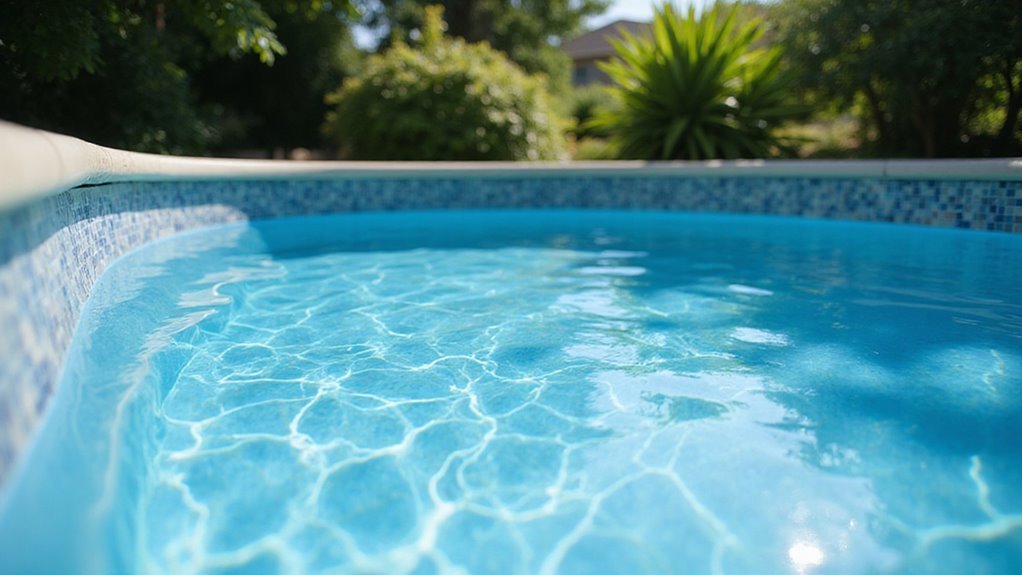
The relationship between saltwater systems and vinyl pool liners isn’t as contentious as many pool owners fear. Contrary to common misconceptions, saltwater doesn’t inherently reduce liner lifespan. Both saltwater and traditional chlorinated pools see similar vinyl durability of 8-12 years, with premium materials potentially lasting beyond 15 years. Maintaining proper chemical balance is essential for preventing liner deterioration in saltwater pools. Regular maintenance of your pool system will significantly extend your liner’s lifespan regardless of sanitization method. Owners should be aware that higher temperatures can increase chlorine demand in saltwater systems, potentially affecting liner longevity.
What’s truly beneficial is how saltwater systems produce milder chlorine below 1.5ppm through electrolysis, reducing exposure to harsh chemical concentrations. This gentler approach eliminates the “chlorine odor” while maintaining proper sanitization. Your liner benefits from consistent, automated chlorine production through systems like IntelliChlor, which helps prevent the spot bleaching that often occurs with manual chlorine additions. However, incorrect use of saltwater chlorination systems can generate dangerously high chlorine that may damage vinyl liners and other pool components. Remember that water balance—not salt content—ultimately determines how your liner ages over time.
Chemical Balance: The Key to Liner Longevity
While many pool owners focus on hardware maintenance, proper chemical balance remains the ultimate determinant of vinyl liner longevity. The ideal pH range of 7.2-7.6 prevents both acidic damage (causing fading and wrinkling) and alkaline stress (leading to expansion and accelerated aging).
You’ll need to maintain chlorine levels between 1-3 ppm to effectively sanitize without damaging your liner. Never allow undissolved granular chlorine to contact the vinyl directly, as it causes bleaching and weakening. This is where saltwater systems offer an advantage by generating gentler hypochlorous acid through electrolysis. Saltwater pools provide additional benefits by being gentler on materials while requiring less frequent chemical handling.
Total alkalinity should stay within 80-120 ppm to stabilize pH fluctuations. Daily testing and prompt adjustments will substantially extend your liner’s lifespan by reducing chemical stress and UV sensitivity.
Comparing Saltwater vs. Traditional Chlorine Impact on Liners
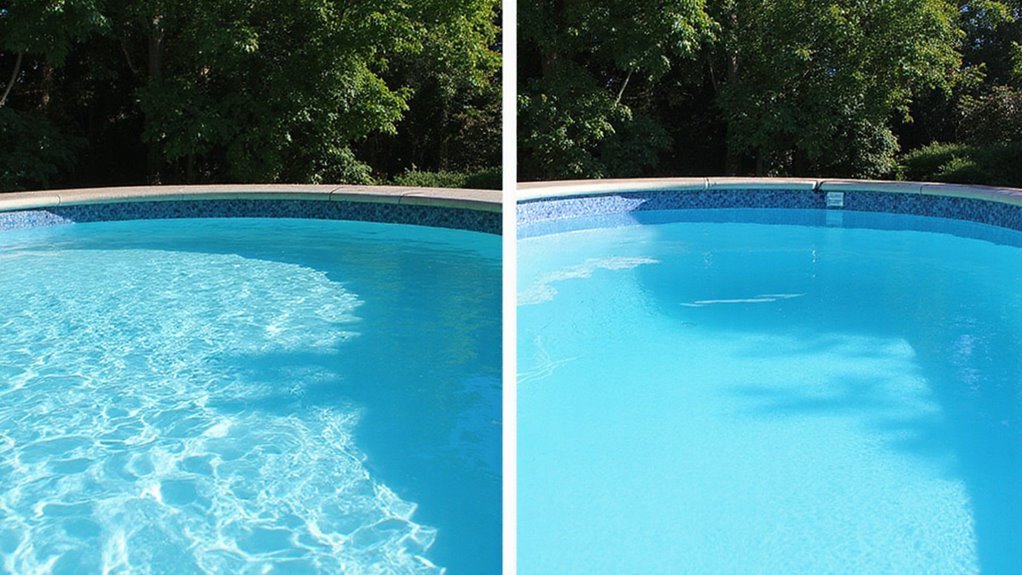
Choosing between saltwater and traditional chlorine systems substantially impacts your vinyl liner’s lifespan, with each option presenting distinct advantages and challenges. Saltwater pools generate consistent, lower chlorine concentrations through electrolysis, reducing the liner degradation that occurs with high chlorine exposure—provided you maintain proper pH balance.
Traditional chlorine pools often experience concentration fluctuations that can stress liners during manual adjustments and shock treatments. However, saltwater introduces corrosion risks to metal components that chlorine systems don’t share, potentially compromising structural integrity if leaks develop.
Your maintenance approach ultimately determines liner longevity in either system. Saltwater’s automated chlorine production minimizes handling errors but demands vigilant pH monitoring, while traditional systems require frequent testing to prevent the extreme chemical imbalances that accelerate vinyl breakdown.
Choosing the Right Liner Material for Saltwater Pools
Selecting the ideal liner material for your saltwater pool substantially influences both its longevity and your maintenance requirements. Vinyl liners offer excellent salt corrosion resistance when properly maintained, with reinforced vinyl providing additional durability for inground installations.
For superior performance, consider fiberglass-reinforced polymer (FRP) liners, which resist corrosion better than traditional options but come at a premium price. Concrete/gunite liners deliver exceptional durability but require professional installation.
Premium saltwater protection comes at a cost—FRP liners outperform standard options while concrete delivers unmatched durability with professional installation.
When selecting materials, verify saltwater compatibility and choose thicker gauges for inground pools. Solid patterns maintain better visibility in saltwater environments. Always check warranty coverage specifically for saltwater systems before purchase.
Don’t forget to pair your liner with saltwater-compatible equipment and sacrificial zinc anodes to protect metal components from corrosion.
Proper Installation Techniques for Saltwater Pool Liners
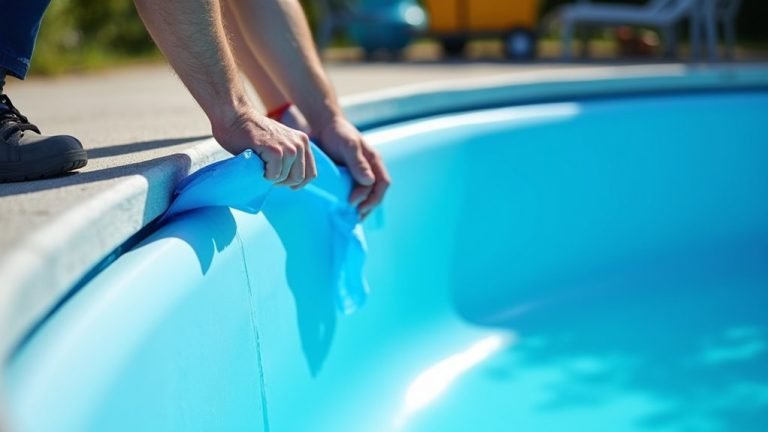
Installing your saltwater pool liner correctly marks the difference between years of trouble-free enjoyment and premature replacement costs. Position your liner carefully, aligning manufacturer arrows with the appropriate pool ends and securing corners with sandbags to prevent shifting. When applying vacuum, place the hose 4-6″ above the pool floor and maintain airtight seals around all openings.
- Your hands gently smoothing wrinkles as the vacuum pulls the liner taut against the pool walls
- Clear vacuum hoses snaking across your pool deck as the liner slowly conforms
- Precise cutting around main drains with careful attention to gasket placement
- Water gradually rising as you install faceplates at the proper depths
- Saltwater-rated screws being carefully tightened without puncturing the delicate liner material
Maintenance Practices to Extend Liner Life in Saltwater Systems
A saltwater pool system demands vigilant maintenance to maximize liner longevity. Keep chlorine below 1.5 ppm and pH between 7.2-7.6 to prevent liner deterioration. Monitor salt levels (2700-3400 ppm) and use stabilizer (30-60 ppm) to protect against UV damage.
Clean your salt cell every two months to remove scale, and replace it every 3-5 years. Run your pump 8-10 hours daily to guarantee proper water circulation and clean skimmer baskets every 2-3 days.
Don’t drain your pool below 50% capacity, as this can cause liner shrinkage. Brush surfaces weekly and vacuum twice weekly to reduce abrasive sediment. Install a solar cover to block harmful UV rays and test water chemistry biweekly, making adjustments promptly to maintain ideal conditions.
Environmental Factors Affecting Saltwater Pool Liner Durability
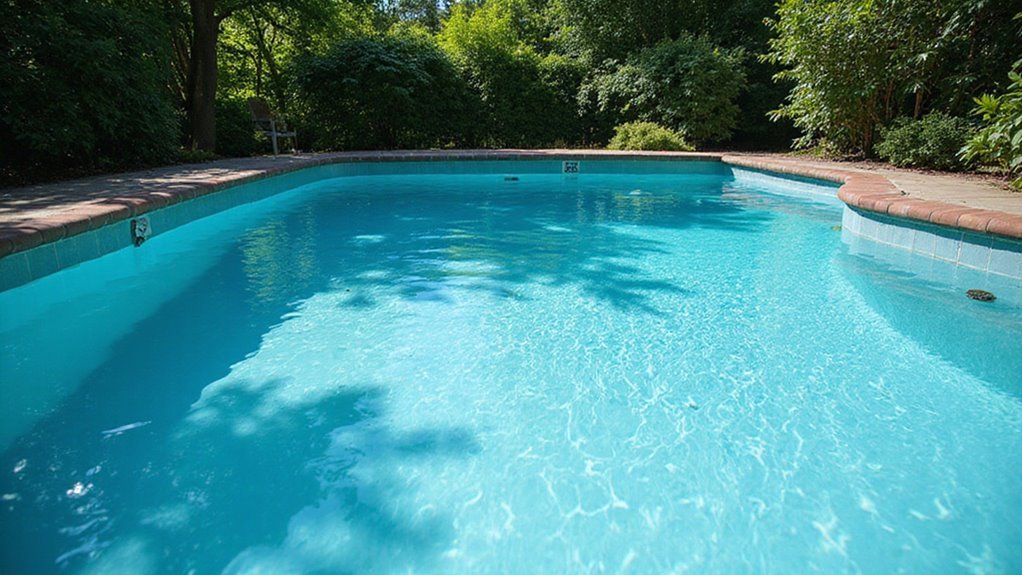
Environmental forces substantially impact how long your saltwater pool liner will last despite your best maintenance efforts. Maintaining ideal pH (7.2-7.8) prevents corrosion while proper salt concentration (2,700-3,400 PPM) guarantees effective chlorination without damaging your liner. Remember that saltwater systems don’t operate effectively below 15.5°C, requiring alternative sanitization methods during cooler months to prevent chemical imbalances.
- Sunlight beating down on exposed liner edges, causing them to fade and crack over time
- Water lapping against the liner during windy days, creating micro-abrasions at the waterline
- Freeze-thaw cycles stretching and contracting vinyl materials in unheated pools
- Salt crystals forming along edges during evaporation, potentially creating sharp edges
- Temperature fluctuations weakening adhesives holding liner seams together
Real-World Lifespan Data: What the Research Shows
Beyond theoretical discussions of saltwater effects, pool owners want concrete data about how system choices influence liner longevity. Studies indicate that saltwater systems may extend vinyl liner life by 1-3 years compared to traditional chlorine pools. This advantage stems primarily from automated chlorine management, which maintains consistent sanitizer levels without the potentially damaging spikes common in manual systems.
You’ll find that high-quality vinyl liners (28-30 mil thickness) in well-maintained saltwater pools consistently reach 8-12 years of service, while standard chlorine pool liners typically last 5-9 years. However, these gains disappear without proper pH management (7.4-7.6) and regular water testing. The critical factor isn’t necessarily salt versus chlorine, but rather the consistency of chemical levels and reduced human error in maintenance.
Cost Considerations: Long-Term Value of Saltwater Systems
Weighing the financial implications of saltwater systems reveals a compelling value proposition despite higher initial costs. While conversion requires $2,000-$6,500 upfront, you’ll recoup $300-$600 annually in chemical savings. The investment typically balances out within three years as you eliminate ongoing chlorine purchases.
- Salt cells glistening underwater, quietly generating chlorine while you enjoy your weekend
- A pristine, streak-free liner maintaining its vibrant color years after installation
- Your bank statement showing steadily decreasing pool maintenance expenses each season
- Potential buyers admiring your home’s saltwater feature during an open house
- Your pool equipment operating smoothly with minimal corrosion damage, extending its useful life
Salt-compatible materials may cost more initially but protect your investment through reduced replacement frequency.
Conclusion
While saltwater systems can be gentler on your skin and eyes, they’re not necessarily kinder to your pool liner. You’ll need to maintain proper chemical balance and invest in salt-resistant materials to maximize longevity. Traditional chlorine pools require more frequent chemical additions but may cause less material degradation. Your climate, maintenance routine, and initial installation quality will ultimately determine whether saltwater extends or shortens your liner’s life.