To find a leak in your pool liner, start with a bucket test by comparing water levels in a bucket placed on the pool step with the pool’s water level over 24 hours. For precise locations, use dye testing by squirting food coloring near suspected areas with the pump off. Visually inspect seams, fittings, and high-traffic areas for tears or bubbles. These simple techniques can help you identify most leaks before calling in professionals.
Recognising Common Signs of Pool Liner Leaks
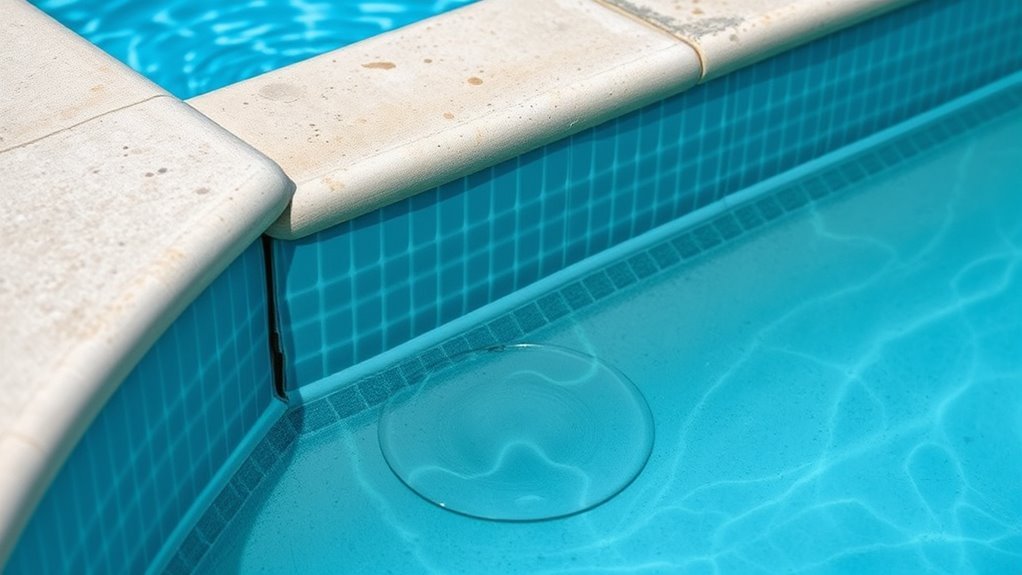
When your pool water level drops consistently despite the absence of heavy splashing or normal evaporation, you’re likely dealing with a liner leak. Look for soggy areas around your pool perimeter, which indicate water escaping underground.
You might notice visible tears, holes, or cracks in your liner where water seeps through. These damaged areas often develop unusual algae growth as nutrient-rich water feeds these organisms. Extensive fabric tears can compromise the protective barrier of your pool liner, leading to significant water loss.
Your water bills can also tell a story—if they’re unexpectedly high, frequent refills might be the culprit. Pay attention to the pool’s surroundings; soft or mushy ground nearby suggests water has been saturating the area. Chemical imbalances in your water can accelerate the liner degradation and contribute to leaks. The pH and chlorine levels will often fluctuate rapidly when a leak exists, requiring more frequent adjustments to maintain proper water chemistry. Performing a simple bucket test can help confirm if water loss exceeds normal evaporation rates. Early detection of these warning signs helps prevent structural damage and keeps repair costs manageable.
The Bucket Test: A Simple DIY Leak Detection Method
Once you’ve identified potential signs of a leak, you’ll need a reliable method to confirm your suspicions. The bucket test offers an easy, equipment-light solution that differentiates between normal evaporation and actual leaks.
To perform the test, fill a 5-gallon bucket with pool water and place it on a pool step. Mark the water level inside and outside the bucket with tape or marker. Turn off all pumps and autofill systems, then let everything sit undisturbed for 24 hours. Make sure the bucket is immersed approximately 5 inches deep in the pool water for accurate comparison.
After the waiting period, compare the levels. If both dropped equally, you’re dealing with evaporation. If the pool level dropped more than the bucket’s water, you’ve confirmed a leak and should consider professional assistance for repair.
Using Dye Testing to Pinpoint Leak Locations
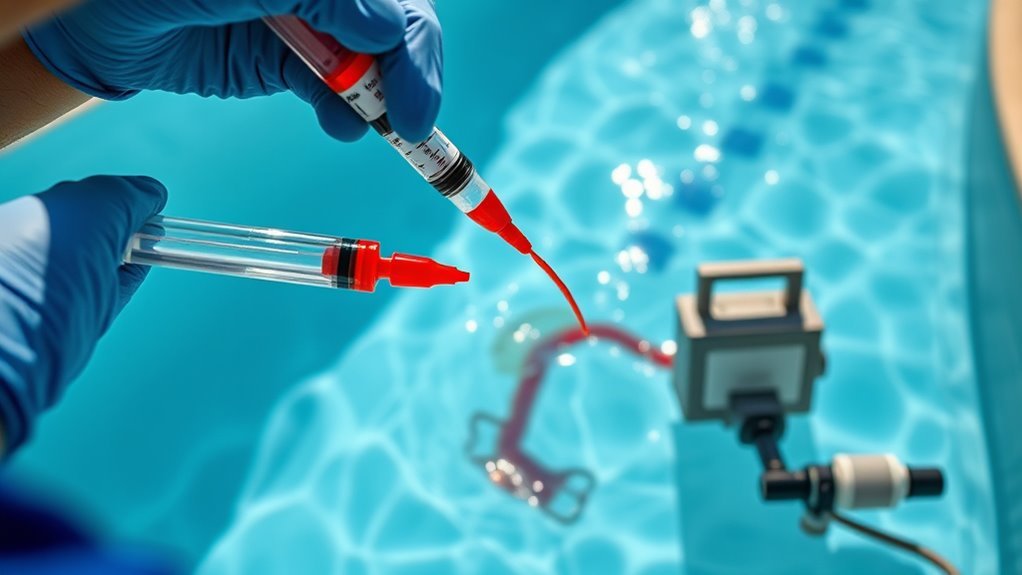
After confirming a leak through the bucket test, you’ll need to locate its exact position before any repairs can begin. Dye testing is one of the most effective methods for this task.
Turn off all pool equipment and grab a dye tester—syringe-style applicators work best for controlled release. Different colored dyes suit various pool environments: red for light-colored pools, yellow for dark surfaces, and fluorescent options for maximum visibility.
Apply a small amount of dye near suspected leak areas like skimmer fittings, return jets, visible cracks, or seams in your liner. Watch carefully—if the dye gets pulled into a crack or opening instead of simply dispersing, you’ve found your leak. Mark the spot with waterproof tape for repair.
Visual Inspection Techniques for Vinyl Pool Liners
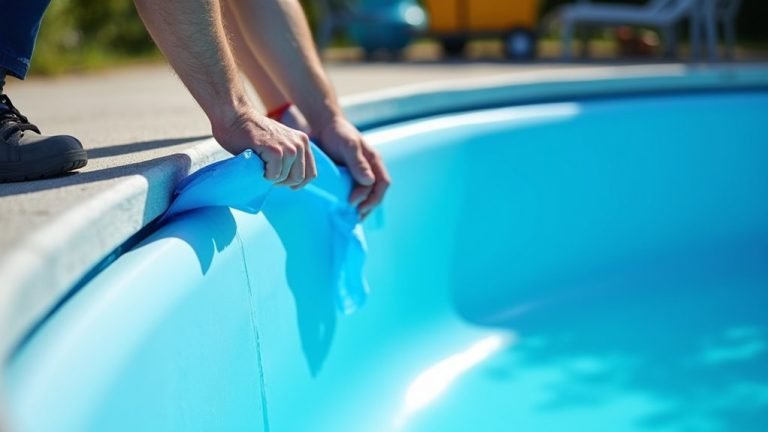
Visual inspection serves as a valuable first step when dealing with suspected pool liner leaks. Begin by turning off your pool equipment and putting on goggles for an underwater search. Look systematically for tears, especially in high-traffic areas, corners, and seams where liner stress is greatest.
Examine all fittings carefully—skimmers, return jets, ladders, and stairs are common leak sources. Check for wrinkles, bubbles, or distortions in the liner, as these often indicate problems. Feel for soft, squishy areas on the pool floor which might suggest leaks beneath.
Don’t forget to inspect the waterline area where chemical damage frequently occurs. While conducting your inspection, watch for soggy ground around your pool, which is a telltale sign of water escape. Regular visual checks can catch small problems before they become major repairs.
Professional Leak Detection Tools and Methods
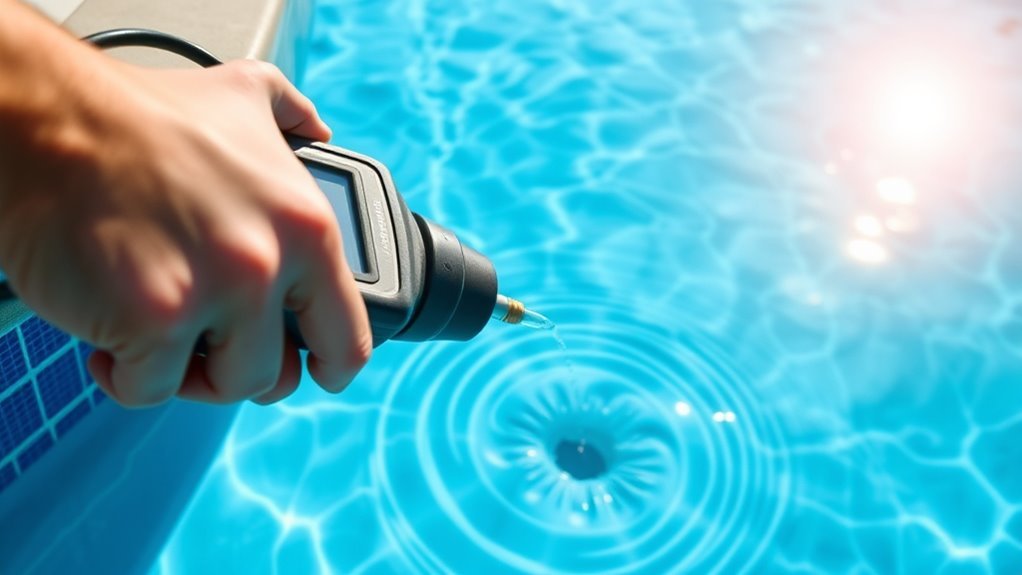
Professional leak detection involves sophisticated tools that extend far beyond what homeowners can achieve through visual inspection alone. When DIY methods fall short, professionals employ specialized equipment to pinpoint even the most elusive leaks.
| Detection Method | How It Works | Best For |
|---|---|---|
| Pressure Testing | Isolates sections to identify pressure drops | Underground pipes |
| Electronic Detection | Tracks changes in electrical conductivity | Vinyl liners without draining |
| Hydrophone Listening | Identifies specific underwater sounds | Non-invasive detection |
| Dye Testing | Follows colored dye movement toward leaks | Visual confirmation |
These methods often work in combination, with technicians trained to interpret results from multiple techniques. While professional services come at a cost, they’ll save you time and money by ensuring repairs target the exact leak location rather than requiring extensive replacement.
Common Areas Where Pool Liner Leaks Occur
While inspecting your pool for leaks, knowing the most vulnerable areas can save you considerable time and effort. Most leaks occur in predictable locations where stress, wear, or installation issues are common factors.
- Skimmer and return fitting areas often develop leaks due to loose connections or worn gaskets that fail to create proper seals
- Light fixtures and electrical conduits frequently leak where seals have degraded from chemical exposure or age
- Stairs and ladder attachments experience constant stress from movement and weight, making them prime spots for liner tears
- Seams and corners of the liner are natural weak points, especially in older pools where sun exposure and chemical imbalances have weakened the material
Pay special attention to areas with visible wrinkles, discoloration, or bubbling, as these often indicate developing leaks.
DIY Repair Options for Minor Liner Damage
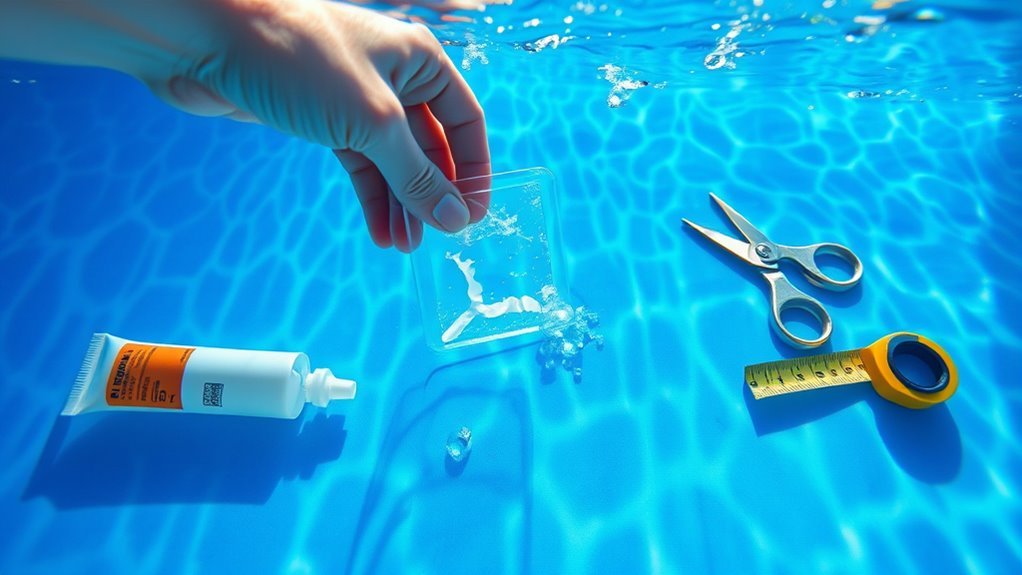
Many pool owners can successfully fix small tears and punctures in their vinyl liner without professional help. Before attempting repairs, thoroughly clean the damaged area to guarantee proper patch adhesion.
DIY vinyl liner repairs are entirely possible with proper preparation of the damaged area.
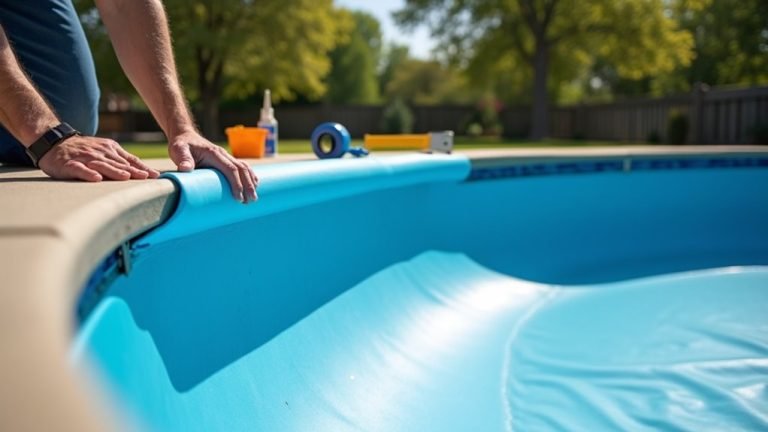
For small holes, underwater patch kits work well. Cut a patch at least twice the size of the tear, apply adhesive evenly, and press firmly until it adheres. Consider adding a second patch over the first for extra security.
For temporary fixes, duct tape or waterproof tape can buy you time until a permanent repair is possible. Peel-and-stick patches offer quick solutions for minor damage but typically don’t last as long.
Remember to regularly inspect your repairs during routine maintenance to confirm they’re holding up properly.
When to Call a Professional for Pool Liner Repairs
Despite your best efforts with DIY solutions, some pool liner issues demand professional attention. You’ll save time, money, and frustration by recognizing when expert help is needed rather than continuing with ineffective repairs.
- Major structural damage – Tears larger than three inches or multiple smaller tears compromising your pool’s integrity require professional assessment.
- Persistent water loss – If your bucket test confirms leakage but you can’t locate the source after thorough inspection, professionals have specialized detection equipment.
- Advanced liner deterioration – Significant brittleness, discoloration, or wrinkling throughout the liner often indicates end-of-life issues requiring replacement.
- Equipment-related complications – Problems involving skimmers, return jets, or areas around electrical components should always be handled by certified technicians for safety.
Conclusion
Finding a pool leak doesn’t have to be a deep-sea expedition. Armed with these detection methods, you’re now equipped to plunge into the challenge like a seasoned explorer. Remember, small drips today can become torrential problems tomorrow. Trust your instincts—sometimes the smallest clue leads to the greatest discovery. When in doubt, don’t let your pool’s health sink; call in a professional lifeguard.