No, you shouldn’t put a liner in a fiberglass pool. Fiberglass pools are designed as complete, seamless units with a built-in gelcoat surface that’s already non-porous and algae-resistant. Adding a liner would compromise the pool’s structural integrity and negate its key benefits of durability and low maintenance. Fiberglass pools can last 50-60 years with proper care, while vinyl liners need replacement every 5-9 years. The real solution might surprise you.
Understanding Fiberglass Pool Construction
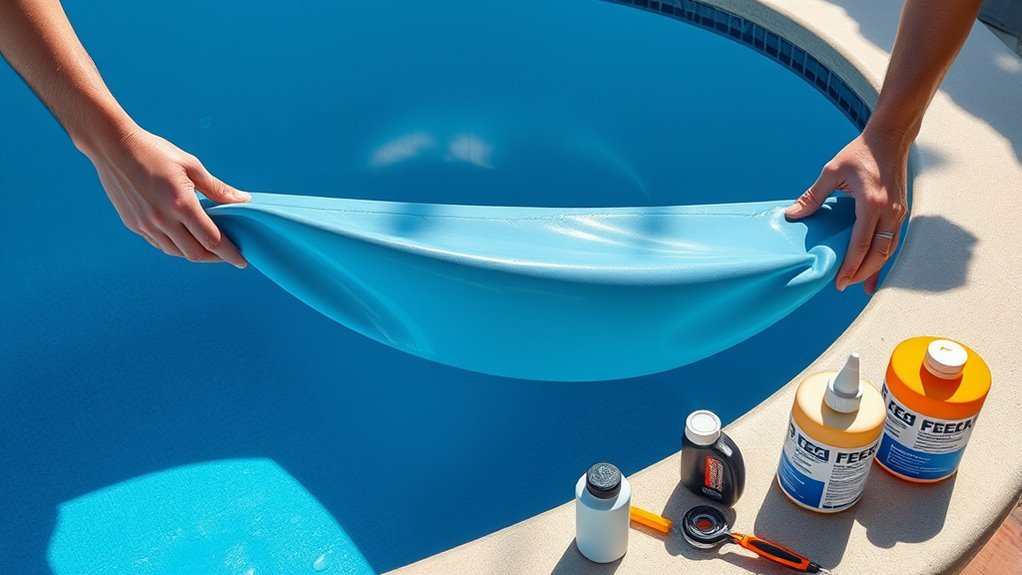
While many pool owners may assume fiberglass pools use liners similar to vinyl pools, fiberglass pools are actually constructed as a single, seamless unit. They’re manufactured in a factory using a carefully controlled process that begins with spraying gelcoat onto a mold.
After the gelcoat application, manufacturers add layers of vinyl ester resin, which serves as a moisture barrier, followed by fiberglass for strength and flexibility. Each layer is critical to creating a durable, watertight structure. The entire shell undergoes curing before it’s released from the mold. This manufacturing process takes place in a sterilized environment to prevent imperfections in the final product.
When your fiberglass pool arrives at your property, it’s ready to install as one complete piece. Installation involves excavation, creating a gravel base, lowering the shell into place, and simultaneously adding water while backfilling to maintain proper pressure distribution. This construction method contributes to the exceptional longevity of fiberglass pools, with some installations from 50-60 years ago still functioning today. Unlike vinyl liner pools that require periodic replacements, fiberglass pools come with a 35-year structural warranty that demonstrates their impressive durability. The advanced gel coat technology used in modern fiberglass pools ensures lasting color vibrancy while minimizing maintenance requirements compared to other pool types.
Why Fiberglass Pools Don’t Need Liners
Fiberglass pools fundamentally differ from vinyl pools in their construction approach, which explains why they don’t require liners. Instead of a separate containment layer, they feature an integrated gel-coat surface that’s smooth, durable, and non-porous.
This gel-coat serves multiple purposes simultaneously – it holds water, prevents algae growth, and resists chemical damage. Unlike vinyl liners that need replacement every 5-9 years (costing around $2,950 each time), the fiberglass surface is designed to last for decades without major repairs.
You’ll appreciate the maintenance benefits too. Fiberglass pools require 60% fewer chemicals than vinyl liner pools, reducing your ongoing costs. Their factory-molded construction allows for quick installation in as little as one week, while vinyl liner pools typically take 6-8 weeks until ready for use. Though customization options are somewhat limited compared to vinyl pools, they still offer attractive aesthetic choices.
Common Misconceptions About Pool Liners
Despite their widespread popularity, pool liners remain surrounded by persistent misconceptions that can mislead potential pool owners. You might believe vinyl liners aren’t durable, yet modern versions can last over 10 years with proper care. Many homeowners underestimate their aesthetic versatility, not realizing vinyl liners come in numerous patterns and colors that can create stunning pool landscapes.
Don’t fall for the myth that vinyl requires more chemicals—their non-porous surface actually demands less chemical maintenance than other pool types. While the initial cost of vinyl liner pools is lower than fiberglass, it’s important to evaluate long-term expenses including eventual liner replacement. Remember that vinyl offers greater customization options, whereas fiberglass pools are limited to pre-made shapes and designs.
Structural Differences: Vinyl vs. Fiberglass Pools
When comparing vinyl and fiberglass pools structurally, you’ll notice fundamental differences that impact everything from installation to longevity. Fiberglass pools consist of a single-piece molded shell, while vinyl pools use steel or polymer frames covered with a liner.
The rigid fiberglass construction adapts well to ground movement, making it ideal for various climates. You’ll find fiberglass pools typically last over 30 years with minimal maintenance, backed by lifetime warranties. Their non-porous surface naturally inhibits algae growth.
In contrast, vinyl pools feature replaceable liners that eventually wear out, despite offering extensive customization options. While vinyl pools cost less initially ($30,000-$45,000 vs. $45,000-$65,000 for fiberglass), you’ll need to budget for liner replacements every 5-9 years—an expense that adds up over time.
Practical Challenges of Adding Liners to Fiberglass
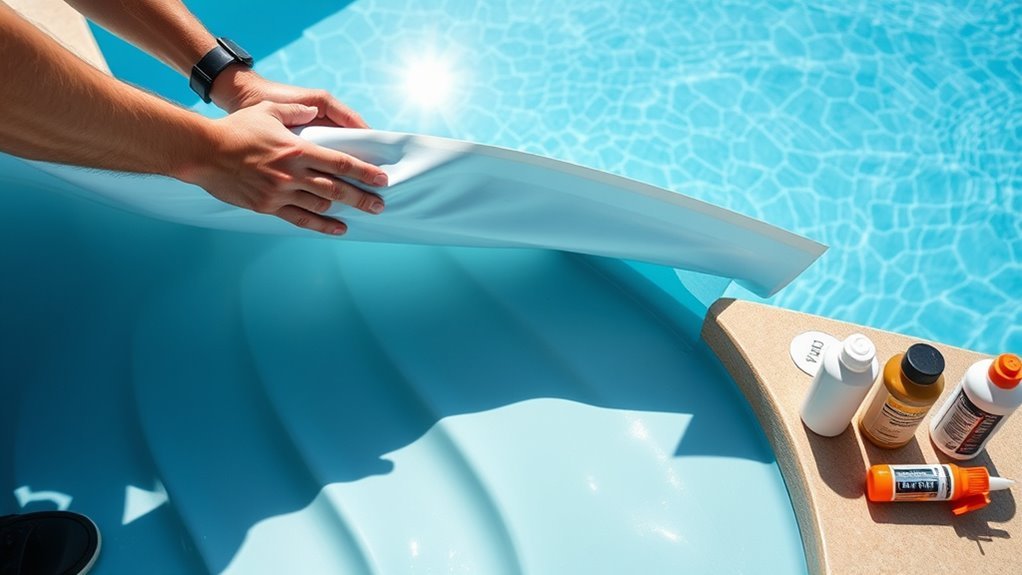
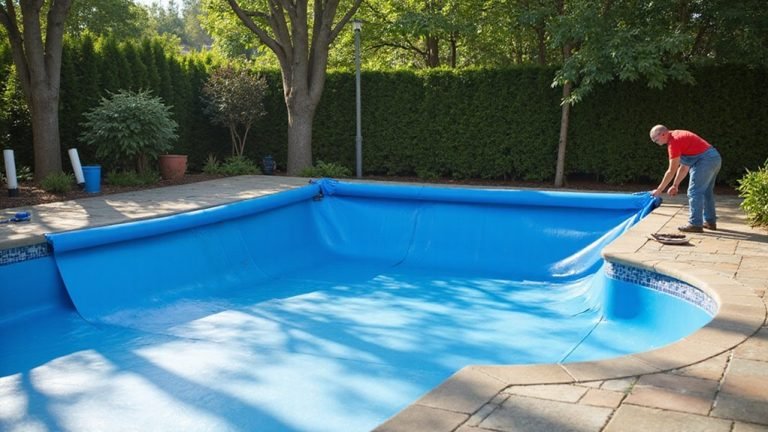
Adding a vinyl liner to a fiberglass pool creates numerous practical challenges that undermine the inherent benefits of both systems. The smooth gelcoat surface of fiberglass isn’t designed for liner adhesion, leading to attachment and compatibility issues.
Installation presents significant hurdles since fiberglass pools are pre-formed single units with limited access. You’ll face logistical complications handling large liners in confined spaces around an already-installed shell.
Water pressure differences between the liner and shell can cause structural stress, potentially resulting in leaks at seams and equipment junctions. Any ground settlement further compounds these risks.
Maintenance becomes doubly complex, requiring specialized knowledge for both components. Repairs to either the liner or underlying fiberglass are more difficult and costly.
Financially, this combination is inefficient, requiring costly modifications that may void warranties and diminish overall value.
Long-Term Maintenance Considerations
Beyond the installation challenges, the long-term maintenance implications of adding a liner to a fiberglass pool create an unsustainable burden for pool owners. You’ll face a contradictory maintenance schedule – caring for both the underlying fiberglass structure and the vinyl liner simultaneously.
While fiberglass pools inherently resist stains and algae growth, adding a liner introduces vulnerabilities. Your vinyl liner will require frequent pH checks, careful chemical balancing, and eventual replacement every 5-9 years at significant cost.
The financial impact compounds over time. One of fiberglass pools’ key advantages is their lower long-term maintenance costs and chemical requirements. By adding a liner, you’re in effect creating a hybrid system that negates these benefits while introducing the worst maintenance aspects of both pool types.
Alternative Solutions for Updating Fiberglass Pools
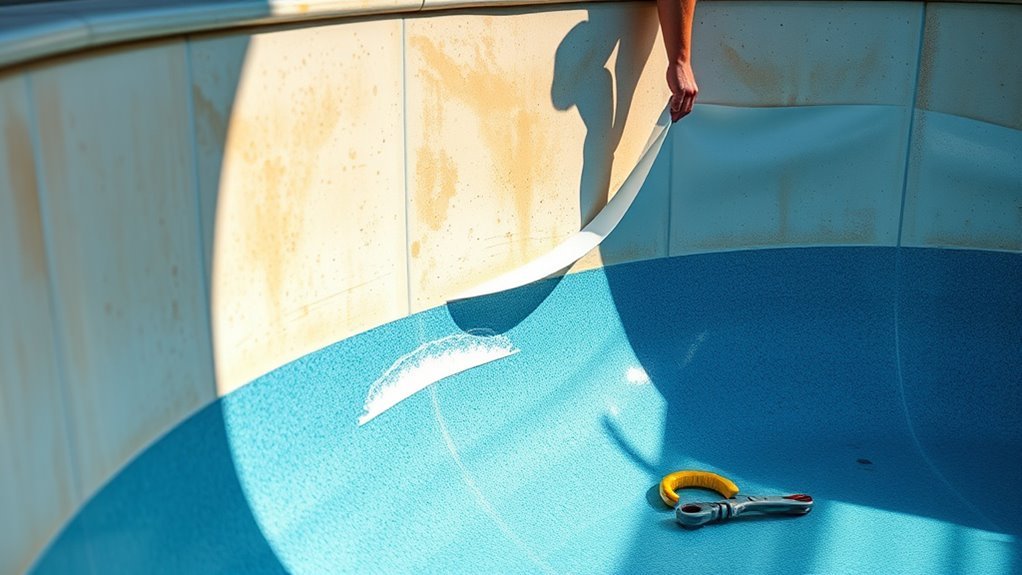
Rather than attempting the problematic vinyl liner retrofit, several viable alternatives exist for updating your aging fiberglass pool. Modern refinishing technologies can revitalize your pool without the extensive modifications a liner installation requires.
| Solution | Benefits | Considerations |
|---|---|---|
| Gel Coat Renewal | Restores original look | Requires professional application |
| Epoxy Resurfacing | Durable finish, various colors | Results vary by application quality |
| Advanced Coatings | Improved UV resistance | Higher cost but longer lifespan |
| Equipment Upgrades | Enhances functionality | Can be done alongside resurfacing |
Professional refinishing services can address cracks, fading, and worn surfaces while maintaining your pool’s structural integrity. You’ll find that combining aesthetic updates with equipment modernization provides the most satisfying refresh for your investment, often at a fraction of replacement costs.
When to Replace Rather Than Retrofit Your Pool
Despite the appeal of retrofitting options, certain circumstances signal that replacement is the wiser investment for your aging pool. When your vinyl liner shows extensive cracks, tears, stretching, or persistent leaks, it’s time to evaluate a complete replacement rather than temporary fixes.
If your pool is over 10 years old with recurring maintenance issues, replacing it with a fiberglass pool can offer significant long-term advantages. Though initial costs run $3,000-$7,000 higher than retrofitting, you’ll benefit from reduced maintenance, better water conservation, and increased property value.
Watch for structural deterioration, as this indicates more serious problems that retrofitting can’t solve. Remember, while vinyl liners require replacement every 6-12 years, a quality fiberglass pool provides durability and savings that often justify the upfront investment.
Conclusion
Adding a liner to your fiberglass pool is like trying to put socks on a fish—it’s counterproductive and defeats the purpose. Your fiberglass pool already has a built-in gelcoat surface designed to be waterproof and durable. Instead of retrofitting with a liner, you’ll get better results by resurfacing, refinishing, or replacing your pool if it’s showing significant wear. Trust the structural integrity of your fiberglass investment as intended.