Relining a concrete pool typically takes 7-14 days from start to finish. Your timeline will vary based on the finish material you choose (pebblecrete: 5-7 days; quartz: up to 4 weeks), weather conditions, and any structural issues discovered during preparation. The process includes draining, surface prep, application, and proper curing time before refilling. Fall offers ideal conditions for your project, with cooler temperatures ensuring perfect finish bonding.
Understanding the Concrete Pool Relining Process
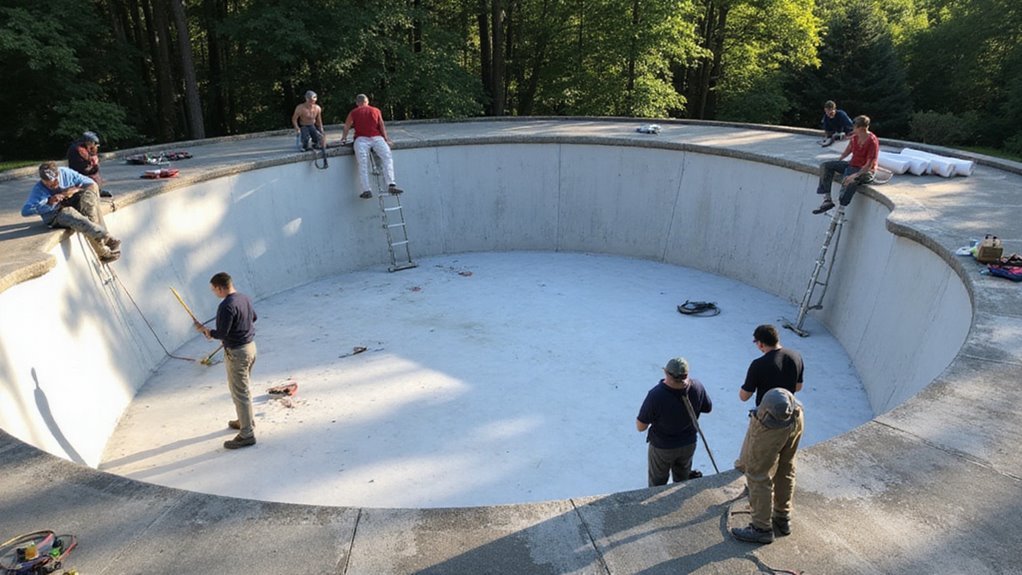
The process of relining a concrete pool involves several critical stages that must be executed in the correct sequence. First, you’ll need to completely drain your pool using submersible pumps while removing hydrostatic plugs to prevent pool shell damage from groundwater pressure. During this phase, guarantee all pool equipment and lights are turned off for safety.
Next comes surface preparation, where professionals sandblast or hydroblast to remove old finishes and repair any cracks or structural damage. This meticulous preparation ensures that rough or abrasive surfaces are eliminated, preventing potential injuries to swimmers when the pool is refilled. The area surrounding your pool should be protected with coverings to minimize dust and noise during this intensive work. The five main steps of the refinishing process include draining, prepping, applying bond kote, installing the interior finish, and filling the pool. After preparing the surface, a specialized bond coat must be applied to the dry pool shell to create proper adhesion between old and new materials. A simple pool resurfacing typically takes 1-2 weeks to complete from start to finish, though this timeline can vary based on weather conditions. This primer needs appropriate curing time before the new finish—whether plaster, quartz, glass beads, or pebble aggregate—can be applied.
Typical Timeline for Complete Pool Resurfacing
Undertaking a complete pool resurfacing project requires careful planning and realistic time expectations. Most professional pool resurfacing projects follow a structured timeline divided into three main phases.
The pre-project preparation typically takes 1-2 days and includes draining the pool, cleaning the shell, inspecting features, and covering surrounding areas to minimize damage. Next comes surface removal and preparation, usually lasting 2-3 days, where crews remove the old surface, repair cracks, and apply bond coats to guarantee proper adhesion.
Finally, the new finish application takes 1-2 days as professionals apply your chosen material (plaster, quartz, or pebble). The choice of material significantly impacts both durability and lifespan of your newly resurfaced pool. Weather conditions can affect drying times, so you’ll need to factor in an additional 3-7 days before refilling your pool.
Factors That Extend Your Pool Relining Project
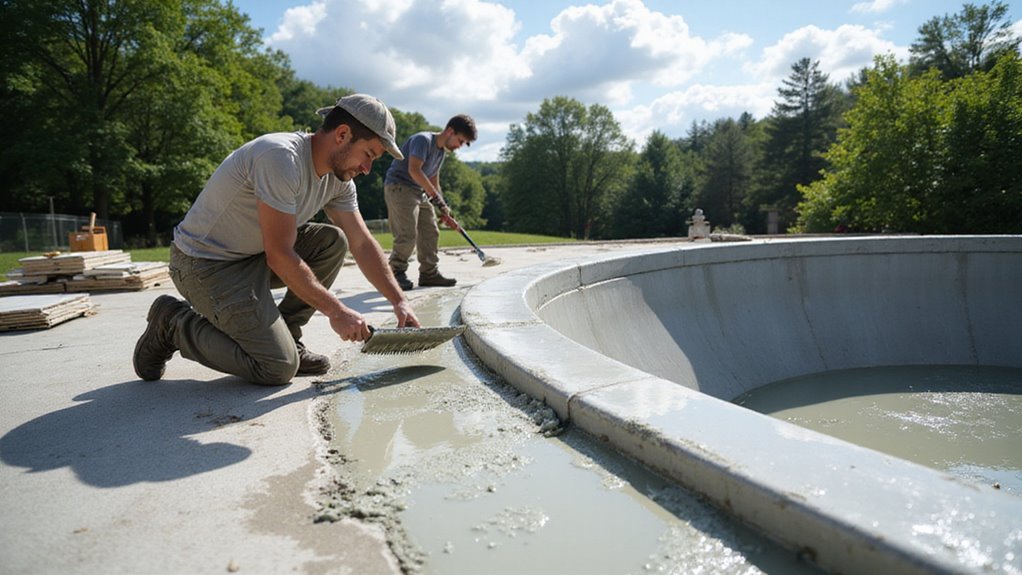
While most pool resurfacing projects follow a predictable timeline, several unforeseen factors can substantially extend your project’s duration. Structural issues like shell cracks, leaking pipes, or electrical problems often require complete remediation before resurfacing can begin.
Weather conditions notably impact outdoor projects—rain disrupts work, extreme temperatures affect curing, and high humidity extends drying times. Don’t overlook permit delays due to code variances or incomplete documentation, which can halt progress entirely.
Material shortages for specialized finishes like colored plaster or decorative tiles can create unexpected waiting periods. Similarly, a shortage of skilled contractors, especially during peak seasons, may extend your timeline.
Finally, hidden costs may arise from site preparation requirements, equipment rentals, or professional engineering assessments needed for complex structural repairs.
The Draining and Surface Preparation Phase
Properly draining and preparing your concrete pool creates the foundation for a successful relining project. Professional teams will handle this critical phase to prevent structural damage from earth pressure. They’ll install hydrostatic plugs and sump pumps at the deep end to manage groundwater pressure and inflow.
Before draining begins, all pool equipment will be shut off. The team will coordinate water disposal with you to guarantee compliance with local regulations. In areas with high water tables, they’ll drill relief holes at multiple points and may install de-watering pumps that require continuous operation.
Once drained, surface preparation involves removing old coatings and debris either mechanically or manually. Technicians will acid wash the surface to eliminate residue, repair cracks and chips with filler materials, and treat any rust stains chemically.
Material Selection and Its Impact on Project Duration
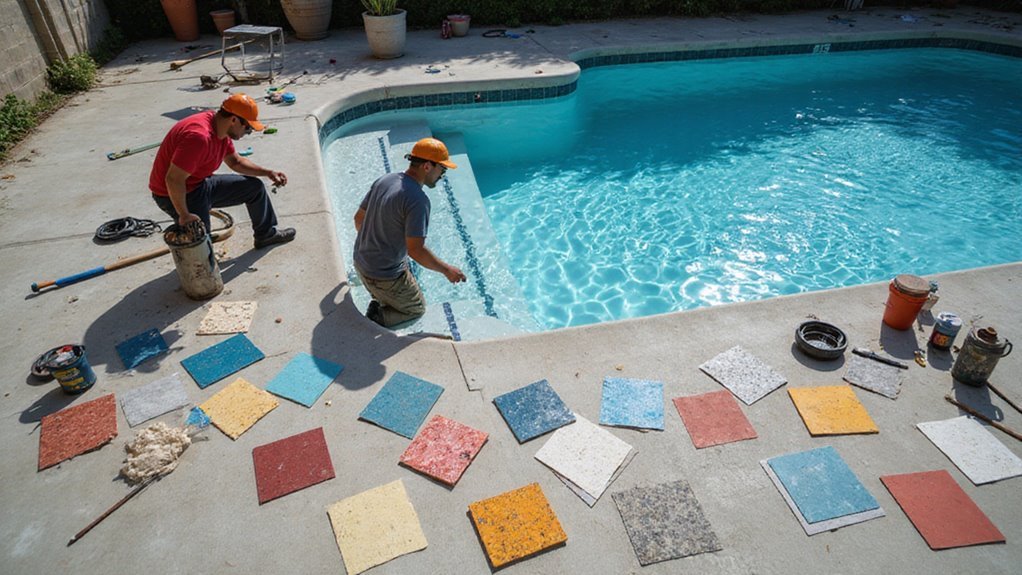
The selection of pool resurfacing materials substantially impacts your project’s timeline and completion date. Different materials require varying preparation techniques, application methods, and curing periods that directly influence how soon you’ll be swimming again.
Material choice dictates your pool’s revival schedule—from prep work to curing time, each option determines when you’ll dive back in.
Pebblecrete needs thorough surface preparation followed by a 5-7 day curing process, while quartz resurfacing demands multiple precise layers and can take up to 4 weeks to fully harden. Ceramic tile installation extends your timeline due to individual placement and grouting requirements.
- Epoxy coatings dry relatively quickly (24-48 hours) but often need recoating
- Climate appreciably affects curing times – warm weather accelerates, while cold slows down
- High humidity can compromise adhesion for materials like epoxy
- Rainfall will postpone application of exposure-sensitive materials, pushing back completion
The Application and Finishing Timeline Explained
Understanding exactly how the pool relining process unfolds helps you establish realistic expectations for your project’s completion. After draining your pool (4-5 days), contractors will remove old coatings and repair any structural issues before conducting pressure tests that require 1-2 days for results.
The core application phase includes aggregate placement, installing decorative elements, and surface finishing through hand-troweling or spray techniques. Following application, acid washing exposes the aggregate while temporary slurry pits remain for 2-3 days during cleanup.
Your timeline will vary based on pool size, weather conditions, complexity of features, crew experience, and site accessibility. Once application is complete, you’ll move through cleanup, inspection, gradual refilling, and initial 24-48 hour filtration before your pool is ready for use.
Post-Installation Curing Requirements
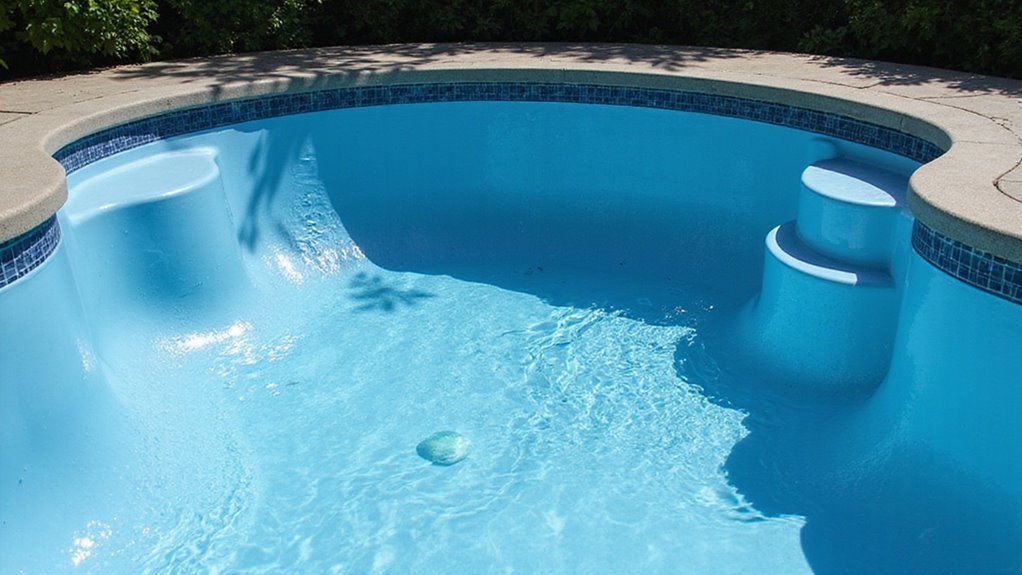
Once your newly relined concrete pool surface has been installed, a structured curing process becomes essential for developing maximum durability and longevity. You’ll need to maintain a 7-day initial curing period with continuous water application, followed by a 14-day final curing phase for full strength development.
During the curing process, you’ll need to:
- Apply daily wet-fogging to prevent shrinkage cracks
- Brush the pool surface daily during the first month
- Monitor and adjust pH, alkalinity, and calcium levels promptly
- Maintain constant water circulation throughout
Remember that 60% of curing occurs in the first 4 weeks, but full curing takes 8-10 months. Hot or dry conditions will accelerate curing, requiring more frequent hydration, while cold or wet weather demands extended curing periods. Proper curing prevents costly surface issues later.
Seasonal Considerations for Pool Resurfacing Projects
Timing your concrete pool resurfacing project strategically can substantially impact the quality, cost, and convenience of the renovation. Fall emerges as the ideal season for pool resurfacing, offering cooler temperatures, reduced contractor demand, and potential cost savings of 10-15% compared to peak seasons.
For successful implementation, aim for periods with 7-10 consecutive dry days and temperatures between 45-85°F. You’ll benefit from contractors’ undivided attention during off-peak months while avoiding the rushed timelines common in summer projects.
Regional factors also matter – coastal pools may require additional protective layers, while cold-climate installations should complete before frost risks emerge. By scheduling your resurfacing in autumn, you’ll guarantee your pool cures properly before next summer’s heavy use begins.
Conclusion
Like a weary traveler finding a new path, your concrete pool‘s journey to renewal takes 1-3 weeks. You’ve now mapped the terrain—from draining to curing—and understand how weather, materials, and damage shape your timeline. As you watch your pool transform, remember: good things come to those who wait. Your patience will be rewarded with sparkling waters for many seasons to come.