A saltwater pool liner typically lasts 6-8 years, shorter than the 10-12 years for chlorine pool liners due to salt’s corrosive nature. You’ll extend your liner’s life by maintaining proper pH (7.4-7.6) and following regular cleaning routines. Watch for signs like leaks, cracking, or color fading to know when replacement is needed. Proper installation, quality materials, and seasonal maintenance can greatly impact how long your investment holds up.
Average Lifespan of Saltwater Pool Liners
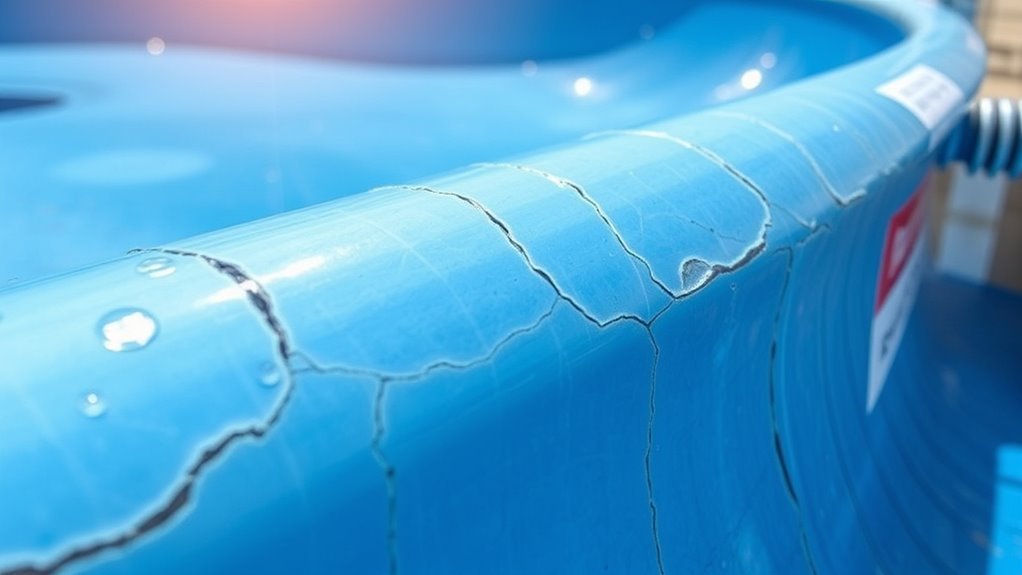
Most saltwater pool liners last between 6 to 8 years before requiring replacement, which is noticeably shorter than chlorine pool liners that typically endure for 10 to 12 years. This shorter lifespan stems primarily from salt’s naturally corrosive properties, which gradually deteriorate vinyl material despite proper maintenance.
You’ll find that several factors influence your liner’s durability, including the quality of installation, thickness of vinyl, and your diligence with pool chemistry. Higher-quality liners, though more expensive, often withstand saltwater conditions better than budget options. Specialized saltwater-friendly liners are specifically designed to resist the corrosive effects of salt systems. Regularly testing pool chemistry up to three times weekly is crucial for maintaining the proper balance of chemicals in saltwater pools.
Regular maintenance is essential for maximizing your liner’s lifespan. By keeping salt levels balanced and monitoring for early signs of wear, you can potentially extend its usefulness. Maintaining proper pH levels is critical to prevent excessive deterioration caused by unbalanced chemistry. It’s important to watch for leaks and tears since these problems can lead to structural damage if left unattended. Remember that proper installation by professionals also greatly impacts how long your saltwater pool liner will serve you.
Key Factors That Affect Your Liner’s Durability
Several vital factors determine how long your saltwater pool liner will last, with proper maintenance being the cornerstone of extended durability. Chemical balance is essential—maintaining pH between 7.4-7.6 prevents premature deterioration and calcium deposits.
The secret to liner longevity lies in diligent maintenance and precise chemical balance—neglect either, and premature replacement becomes inevitable.
Your liner’s material quality and thickness heavily influence longevity, with salt-resistant options offering superior performance. Professional installation helps prevent wrinkles and tears that can drastically reduce lifespan. Regular state checks that look for obvious cracks and tears can help you address issues before they become major problems.
Environmental conditions play a major role too. UV exposure accelerates degradation, making pool covers essential protective tools. Water level maintenance prevents stress on liner edges, while temperature fluctuations can cause material breakdown over time.
Don’t underestimate the impact of user behavior—sharp objects and rough equipment can cause punctures, while inconsistent chemical maintenance damages liner integrity over time.
Signs Your Pool Liner Needs Replacement
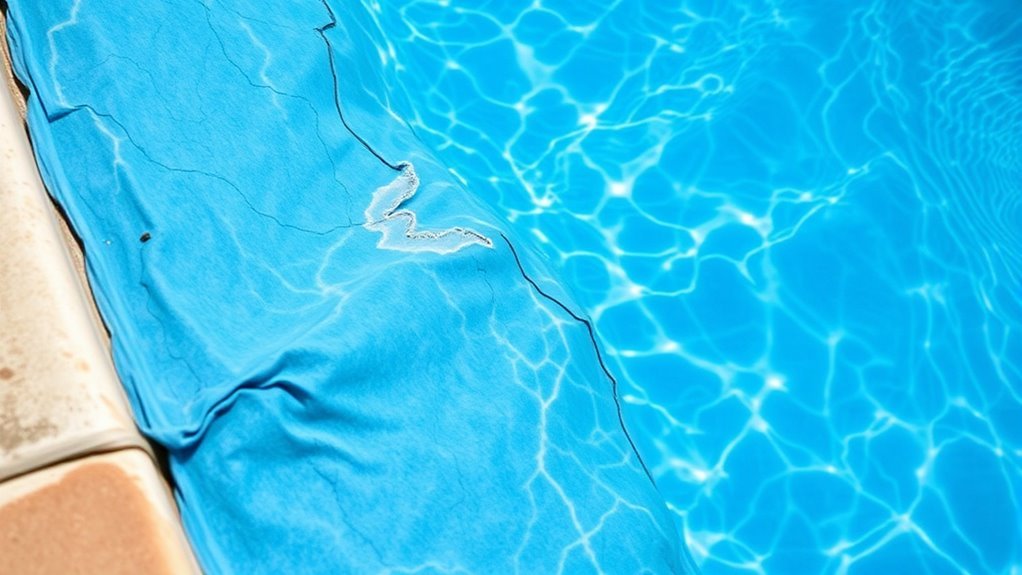
Recognizing when your saltwater pool liner requires replacement can save you from costly repairs and potential structural damage. Watch for persistent leaks and unexplained water loss exceeding half an inch daily—these signal liner failure and risk soil erosion around your pool.
Physical damage indicators include cracking, tearing, brittleness, wrinkles, and stretching around skimmers and jets. You’ll also notice fading colors, stubborn stains from rust or algae, and loss of vibrancy due to UV damage.
Most vinyl liners last 7-12 years before showing these aging signs. When your liner becomes brittle or loses elasticity, it’s likely slipping from its track. Don’t delay replacement once these symptoms appear—waiting typically leads to higher repair costs and may compromise your pool’s structural integrity.
Essential Maintenance Practices to Extend Liner Life
Extending your saltwater pool liner’s lifespan requires consistent maintenance practices that protect both its material integrity and appearance over time. Use pool covers to prevent debris accumulation and protect from UV damage. Maintain balanced water circulation to guarantee even salt distribution throughout your pool.
Establish a weekly routine of skimming, brushing, and vacuuming to remove debris before it can cause staining or damage. Rinse the area around your pool regularly to prevent salt erosion on surrounding surfaces.
Avoid using harsh chemicals that can deteriorate your liner – only use pool-specific products and verify they’re completely dissolved before adding them. Maintain proper water levels, keeping it midway up the skimmer opening, and inspect regularly for small tears that can be repaired before they become major issues.
The Impact of Water Chemistry on Vinyl Liners
Water chemistry stands as the foremost determinant of your vinyl liner’s health in a saltwater pool. Maintaining proper pH (7.2-7.8) and alkalinity (80-120 ppm) prevents premature aging and material degradation. Salt systems require vigilant monitoring to avoid excessive sanitizer production that can damage your liner.
| Chemical Factor | Ideal Range | Impact on Liner |
|---|---|---|
| pH | 7.2-7.8 | Prevents breakdown |
| Alkalinity | 80-120 ppm | Stabilizes pH |
| Calcium Hardness | 150-250 ppm | Prevents wrinkling |
| Cyanuric Acid | 30-50 ppm | Protects sanitizer |
| Salt | 2700-3400 ppm | Generator efficiency |
Chemical imbalances can dramatically reduce your liner’s expected 15-20 year lifespan. High chlorine levels cause fading and reduce elasticity, while improper pH leads to wrinkles and brittleness. Remember that enclosed pools need extra ventilation to prevent chemical buildup that accelerates liner deterioration.
Saltwater vs. Traditional Chlorine: Effects on Liner Longevity
The fundamental differences between saltwater and traditional chlorine systems create distinct impacts on your pool liner’s lifespan. While saltwater liners typically last 5-10 years, traditional chlorine liners often extend to 6-12 years under similar conditions.
Your pool liner will typically last 1-2 years longer with traditional chlorine than with a saltwater system.
Saltwater systems continuously generate chlorine, which can accelerate liner degradation if salt levels aren’t properly maintained. This ongoing chemical production may cause premature aging, wrinkles, and elasticity loss compared to manually-added chlorine pools.
Both liner types suffer from UV exposure and improper chemical balance, but saltwater environments require more vigilant monitoring. Your maintenance practices greatly influence longevity regardless of pool type—regular water testing and chemical balancing are essential for either system.
Opt for thicker, higher-quality liners if you’re running a saltwater pool to offset potential chemical stress.
Cost Analysis: Timely Replacement vs. Delayed Maintenance
Making financial decisions about your saltwater pool liner requires careful analysis of both short and long-term costs. While patching a small tear might cost $100-$500, a full replacement ranges from $2,466 to $7,500 for inground pools.
Timely replacement prevents costly consequences: water loss from leaks, structural damage, and equipment deterioration. You’ll also avoid the increased labor expenses that come with complex repairs resulting from neglect.
For saltwater pools specifically, you’ll pay more upfront for salt-resistant materials, but this investment pays off through extended liner life. The best financial strategy includes budgeting for regular maintenance, choosing liners with extensive warranties, and conducting seasonal inspections to identify issues before they become expensive problems.
Seasonal Considerations for Pool Liner Health
Throughout each season, your saltwater pool liner faces unique challenges that can greatly impact its longevity. In summer, regular skimming, vacuuming, and gentle brushing are vital to prevent debris-related damage and algae buildup that can stain your liner.
As winter approaches, thorough cleaning and proper winterizing become essential. Lower water levels below the skimmer line, add winterizing chemicals, and invest in a high-quality winter cover to protect against debris and harsh weather.
Year-round, maintain ideal water chemistry for your saltwater pool to prevent liner degradation. Monitor salt levels carefully, as saltwater can accelerate corrosion of metal components if leaks occur. UV exposure is particularly damaging, so consider UV-resistant materials or covers to extend your liner’s lifespan.
Choosing the Right Liner Material for Saltwater Systems
When selecting materials for your saltwater pool liner, durability and chemical resistance should be your top priorities. Vinyl liners offer affordability and design versatility with a 10-15 year lifespan, but they’re susceptible to chemical damage if not properly maintained.
For enhanced durability, reinforced PVC liners provide excellent chemical resistance with their protective varnish. Fiberglass, though pricier, offers superior longevity with minimal maintenance due to its non-porous, chemical-resistant surface.
If budget permits, concrete or gunite liners deliver exceptional durability, though they require professional installation and proper water chemistry management. The thickness of your chosen material considerably impacts lifespan, as does installation quality. Remember that long-term value often outweighs initial costs when selecting a saltwater-compatible liner.
Professional vs. DIY Liner Replacement Options
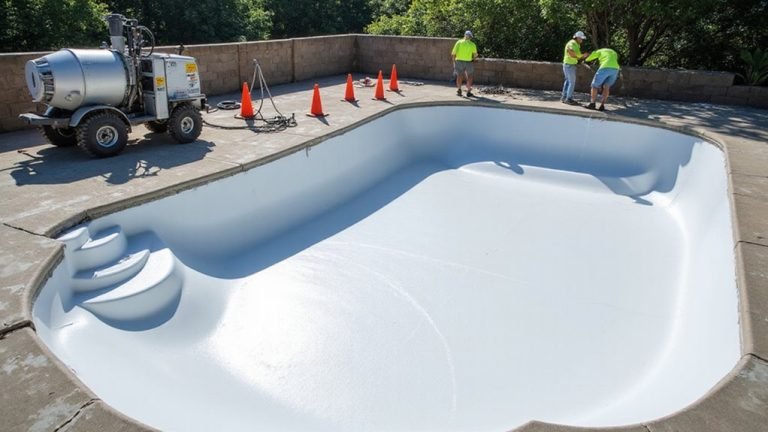
The decision between hiring professionals or tackling a saltwater pool liner replacement yourself hinges on several vital factors. While DIY methods can save on labor costs and provide scheduling flexibility, they come with significant risks.
Professional installers typically complete the job in one day with proper tools and techniques that guarantee a wrinkle-free fit. They’ll assess your pool for damage before installation and often provide warranties that DIY approaches don’t include.
If you’re considering the DIY route, be aware that improper installation may lead to tears, leaks, and a shortened liner lifespan. With saltwater already reducing liner longevity to 6-8 years due to its corrosive nature, proper installation becomes even more essential for maximizing your investment and avoiding costly repairs down the line.
Conclusion
Your saltwater pool liner typically lasts 7-10 years with proper care. By maintaining balanced water chemistry, addressing repairs promptly, and keeping your liner shielded from the sun’s rays, you’ll extend its life considerably. Don’t wait until your liner resembles the Titanic after its iceberg encounter—regular inspections save thousands in the long run. When replacement time comes, invest in quality materials specifically designed for saltwater environments.