Above ground pool liners typically last 6-10 years, though high-quality vinyl can extend to 15 years with proper care. Your liner’s lifespan depends on environmental conditions, maintenance routine, material quality, installation, and usage. You’ll know it’s replacement time when you spot tears, leaks, wrinkles, or fading patterns. Extending your liner’s life requires regular cleaning, balanced water chemistry, and prompt repairs. The right material choice could save you money and maintenance headaches down the road.
Average Lifespan of Above Ground Pool Liners
When investing in an above ground pool, you’ll typically get 6 to 10 years of use from your liner before replacement becomes necessary. This timeline represents the industry standard across most sources, though your actual experience may vary depending on several factors.
The quality of vinyl used in your liner plays a significant role in its durability. High-quality materials tend to resist deterioration longer than budget options. With exceptional maintenance and favorable conditions, some liners can perform well for up to 15 years, though this exceeds typical expectations. Maintaining proper pH level and overall water chemistry will significantly extend your liner’s useful life. Regular cleaning once a week can significantly prevent buildup that deteriorates liner materials. Using a pool cover can protect your liner from damaging UV exposure and minimize debris accumulation. Keep in mind that most liner warranties are heavily prorated, with full coverage typically only lasting 2-5 years.
Interestingly, above ground liners generally outlast their in-ground counterparts, which typically last 5 to 9 years. This difference occurs because in-ground liners face unique challenges like groundwater pressure that above ground pools avoid.
Factors That Affect Your Pool Liner’s Longevity
Several key factors determine how long your above ground pool liner will last, with proper attention potentially extending its life by years. Environmental conditions play an essential role—UV exposure weakens vinyl, while temperature fluctuations cause expansion and contraction that stress the material.
Your maintenance routine matters greatly. Balanced water chemistry prevents chemical damage, while regular cleaning prevents stains and degradation. Water level maintenance halfway up the skimmer prevents undue stress on liner materials. The liner’s quality itself—thickness, material type, and UV protection—directly impacts durability.
Don’t underestimate installation quality. Professional installation with proper fit minimizes wrinkles and stress points. Finally, how you use your pool affects longevity—foot traffic increases tear risks, and proper winterization prevents seasonal damage. Using covers between swims shields against UV rays and debris.
Signs It’s Time to Replace Your Pool Liner
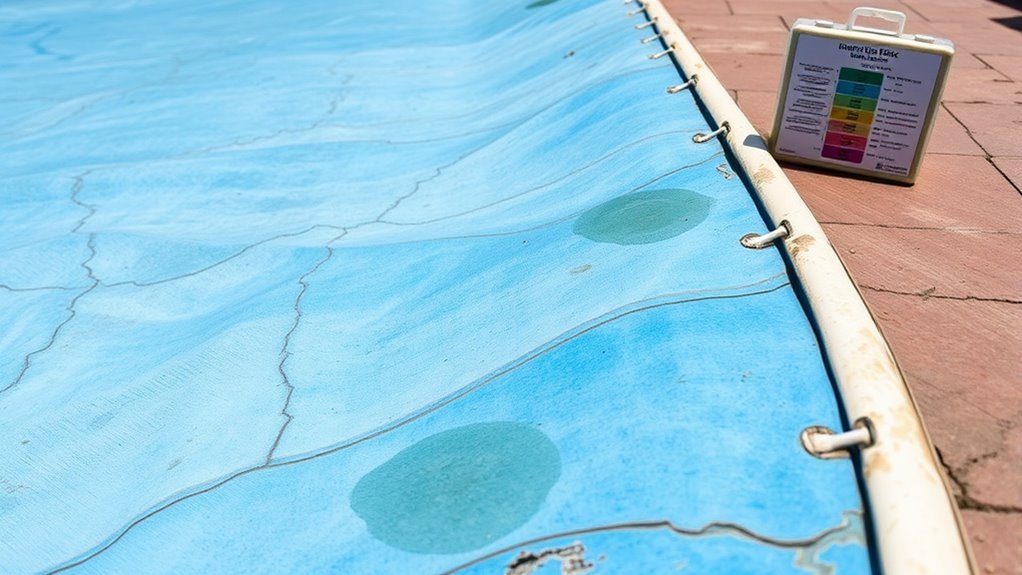
Recognizing the right moment to replace your above ground pool liner can save you from costly water damage and extended downtime. Look for visible tears, cracks, or holes that compromise your liner’s integrity and cause leaks.
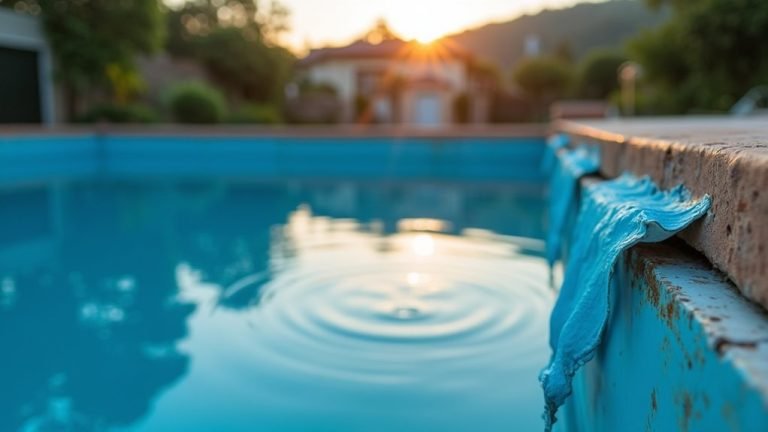
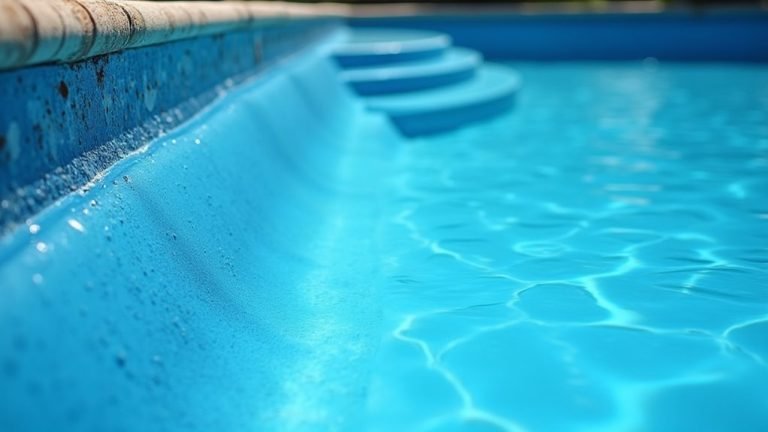
If you’re constantly adding water to your pool, you likely have a leak that needs addressing. Watch for wrinkles and bunching, which indicate the liner has lost elasticity. Fading patterns, stubborn stains, and general discoloration aren’t just aesthetic concerns—they signal material degradation.
Pay attention to brittleness in the liner material, as this makes it vulnerable to tears. UV damage over time weakens the structure, even if not immediately visible. For safety and appearance, consider replacement when your liner shows these failing signs, ideally scheduling work during spring or fall.
Maintenance Tips to Extend Liner Life
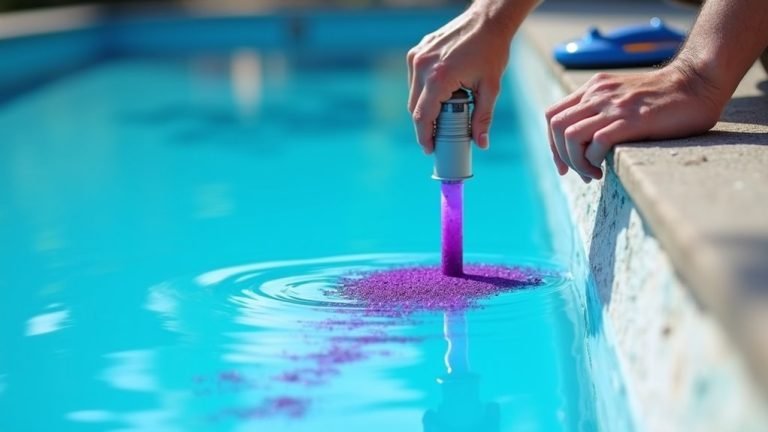
Five key maintenance practices can greatly extend your above ground pool liner’s lifespan beyond the average 6-10 years. Regular cleaning with soft brushes and pool-specific cleaners prevents buildup that can degrade vinyl over time. Equally important is maintaining proper water chemistry—keep pH between 7.2-7.6 and chlorine at 1-3 ppm.
Want your above ground pool liner to last? Regular cleaning and proper water chemistry are your first line of defense against premature replacement.
- Install protective wall foam to prevent friction between the liner and metal walls
- Test water chemistry weekly using reliable test kits to avoid chemical damage
- Inspect for small tears regularly and repair immediately with vinyl patch kits
- Keep pets away from the pool area to prevent claw punctures
Don’t be fooled by lengthy warranties—proper maintenance is your best protection against premature replacement costs.
Comparing Different Liner Materials and Their Durability
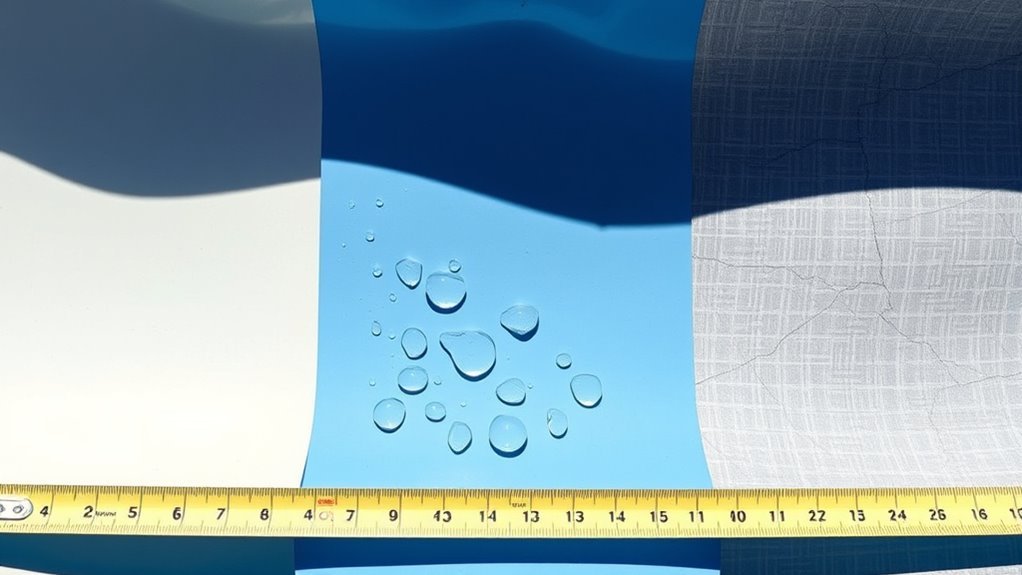
The three most common liner materials for above ground pools vary considerably in durability and lifespan. Standard vinyl liners, often made from recycled materials, typically last around 5 years with proper care. For greater longevity, premium virgin vinyl liners can extend your pool’s life to 10-15 years, though at a higher cost.
Thickness matters remarkably when selecting vinyl liners – thicker options resist punctures and UV damage better than thinner alternatives. If you’re looking for enhanced strength, reinforced vinyl with scrim backing provides additional protection against tears.
Your pool’s environment plays an essential role in material performance. Consider how extreme sunlight, freezing temperatures, and chemical exposure will affect your liner. While rarer for above-ground pools, fiberglass-reinforced polymers offer exceptional durability for those willing to invest in premium protection.
Conclusion
You’ve diligently researched pool liner lifespans, only to discover they’ll inevitably fail despite your best efforts. While you’re carefully balancing chemicals, your liner is secretly deteriorating anyway. Isn’t it ironic? You’ll spend thousands maintaining a temporary oasis that’s designed to expire. So enjoy those precious 7-10 years of swimming—the countdown’s already begun the moment you filled your pool.